Case Study
Inch Cape Offshore wind farm
The Inch Cape Offshore Wind Farm is a major offshore wind development in the North Sea, located 15km off the east coast of Scotland consisting of 72 wind turbines that will generate and provide 1.1 Gigawatt of green energy back to the grid for use throughout the UK.
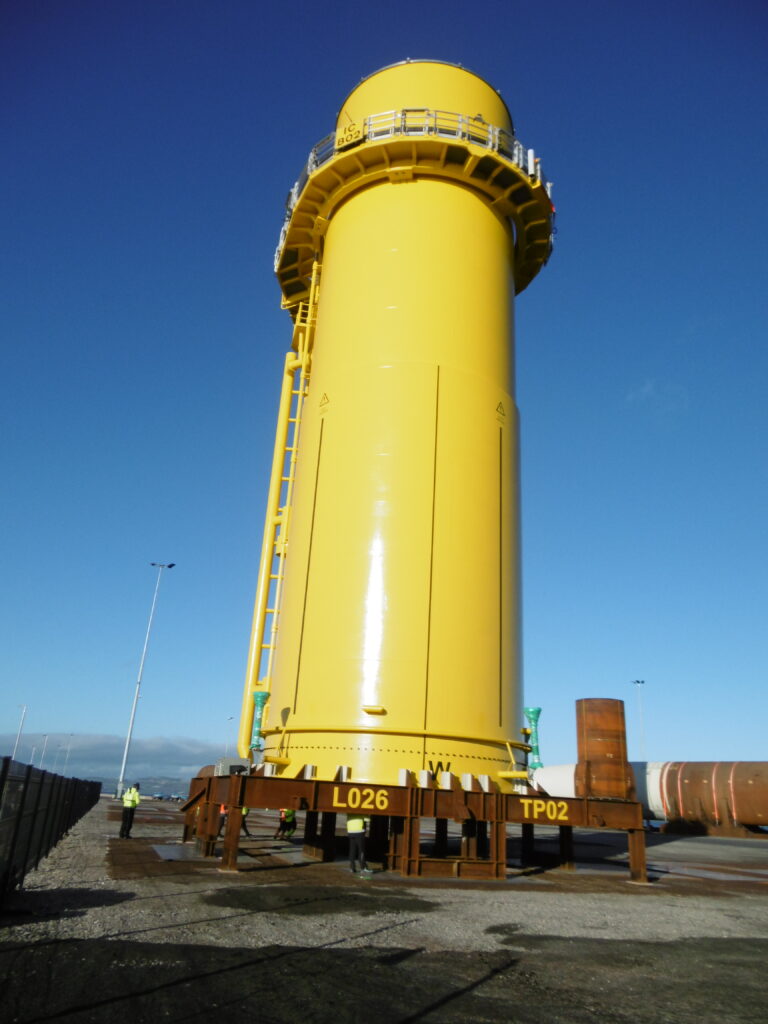
The project comprises 54 monopile foundations and 18 jacket foundations, together with associated transition pieces and pin piles. The components are exceptionally large and heavy, presenting significant engineering challenges in developing safe and practical temporary storage arrangements within the constraints of the existing site infrastructure.
OUR ROLE
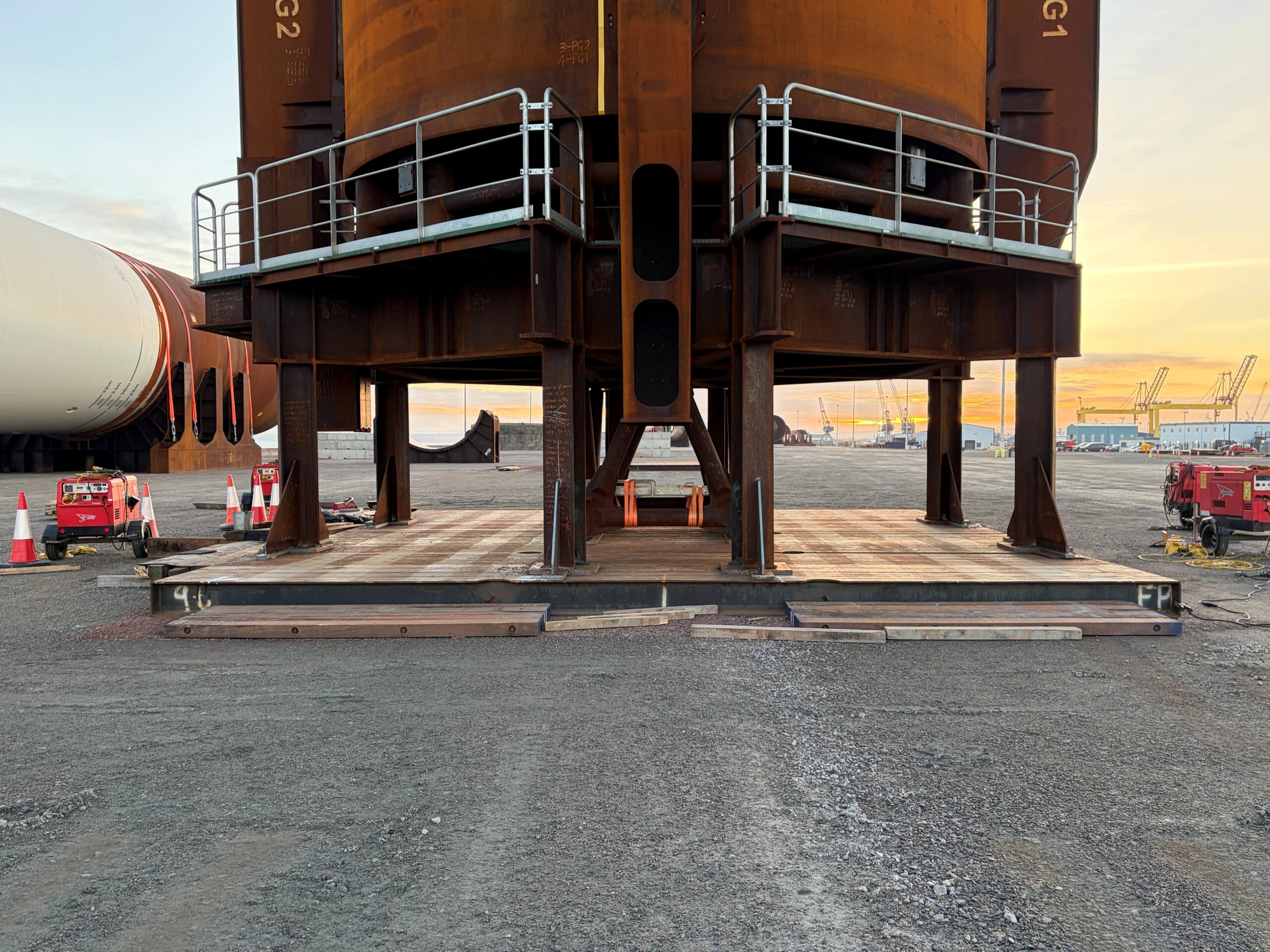
We were appointed by Techlift Ltd to provide technical support by assessing, designing and detailing an array of temporary supports for the large offshore foundation components located at the purpose-built storage facility at the Port of Leith, Edinburgh.
This included the development of bespoke concrete support blocks, finite element analysis of steel load-spreading plates, and the assessment and optimisation of loading arrangements against the available ground-bearing capacities.
Challenges
The scale and mass of the offshore foundation components required careful consideration of their temporary support arrangements.
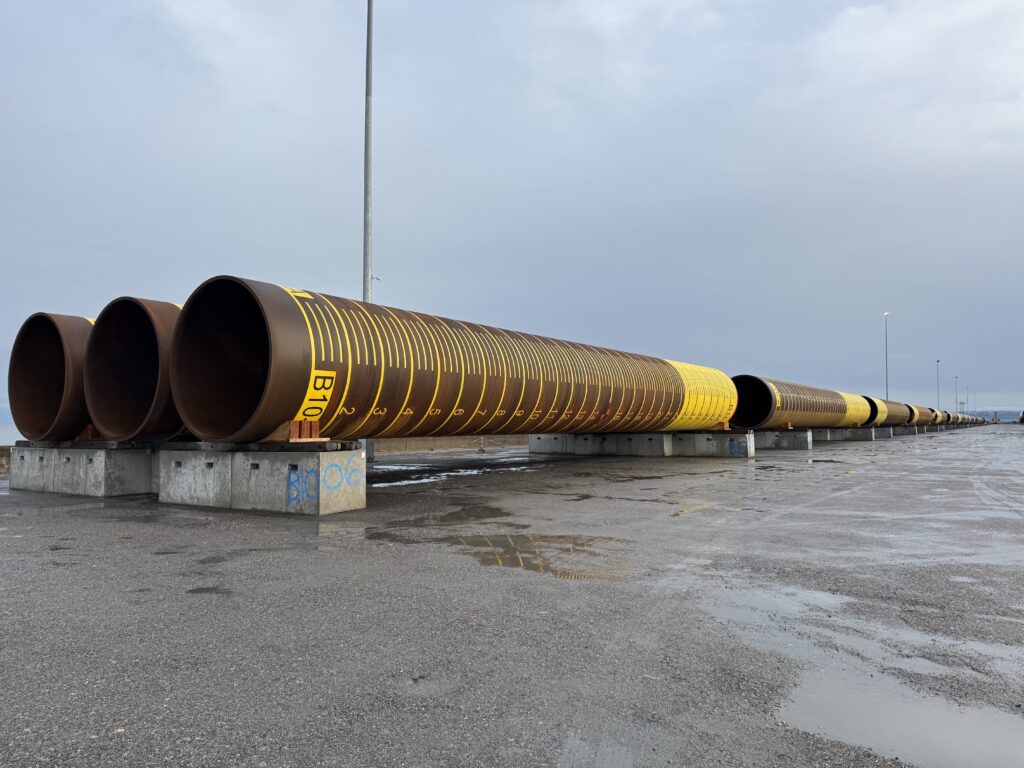
Monopiles exceeding 100 metres in length and 11.5m in diameter presented particular challenges in establishing suitable support positions and distributing the substantial self-weight into the underlying ground.
Transition pieces up to 28m tall, 45m long pin piles and jacket foundations weighing in excess of 2,500 tonnes each introduced additional requirements arising from their different geometries, loading characteristics and support configurations.
The temporary works design needed to address these differing requirements through appropriate combinations of foundation supports and load-spreading arrangements with consideration of the bearing capacity of the existing storage facility and its supporting ground. Further challenges involved providing these solutions whilst maintaining maneuverability of the lifting vehicles in and amongst the foundation arrangements.
SUCCESSES
The project demonstrated the application of structural analysis and foundation engineering principles to the temporary storage of exceptionally large offshore wind components providing cost effective solutions that aligned and were able to be installed in line with the delivery of the foundation components.
The principal engineering challenges arose from the scale and weight of the components, the need to develop appropriate temporary support arrangements and the limitations imposed by the existing ground-bearing capacities.
The use of bespoke concrete support blocks, finite element analysis of steel plates and tailored load-spreading configurations provided a means of assessing alternative support solutions against the specific loading conditions.
The work required practical engineering judgement to integrate structural performance, foundation requirements and site constraints into appropriate temporary works designs.