Case Study
CNG Fuels – Corby
CNG Fuels is the largest supplier of 100% renewable biomethane to the transport sector in Europe. Its fuels offer emissions reductions of as much as 90% compared to more traditional fuel solutions, preventing more than 200,000 tonnes of GHG emissions being emitted into the area each year.
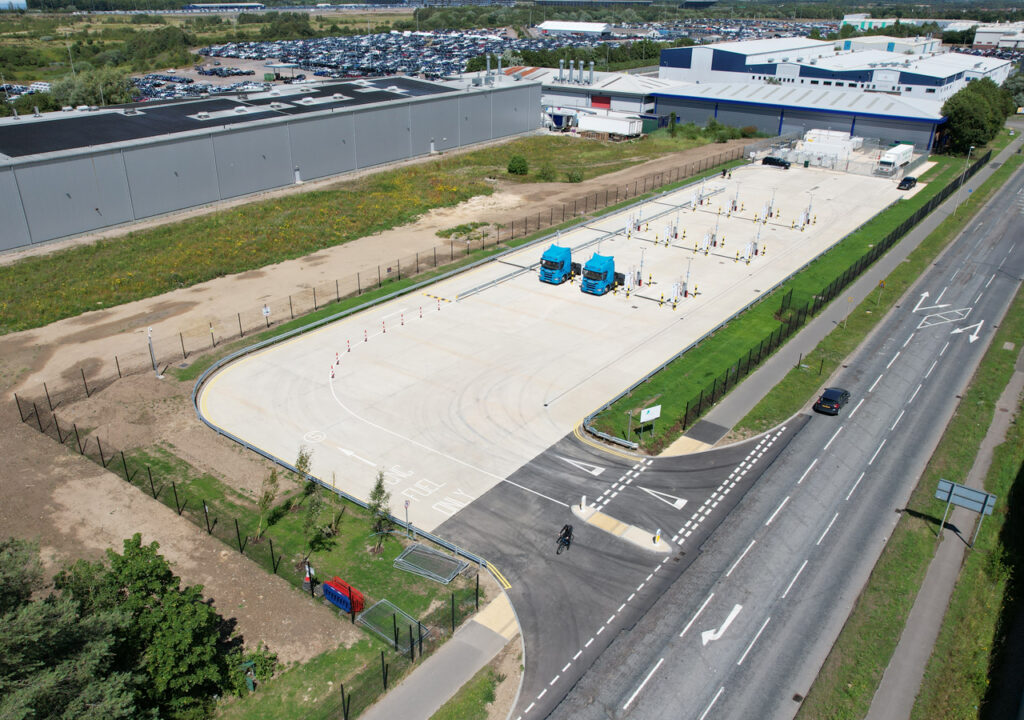
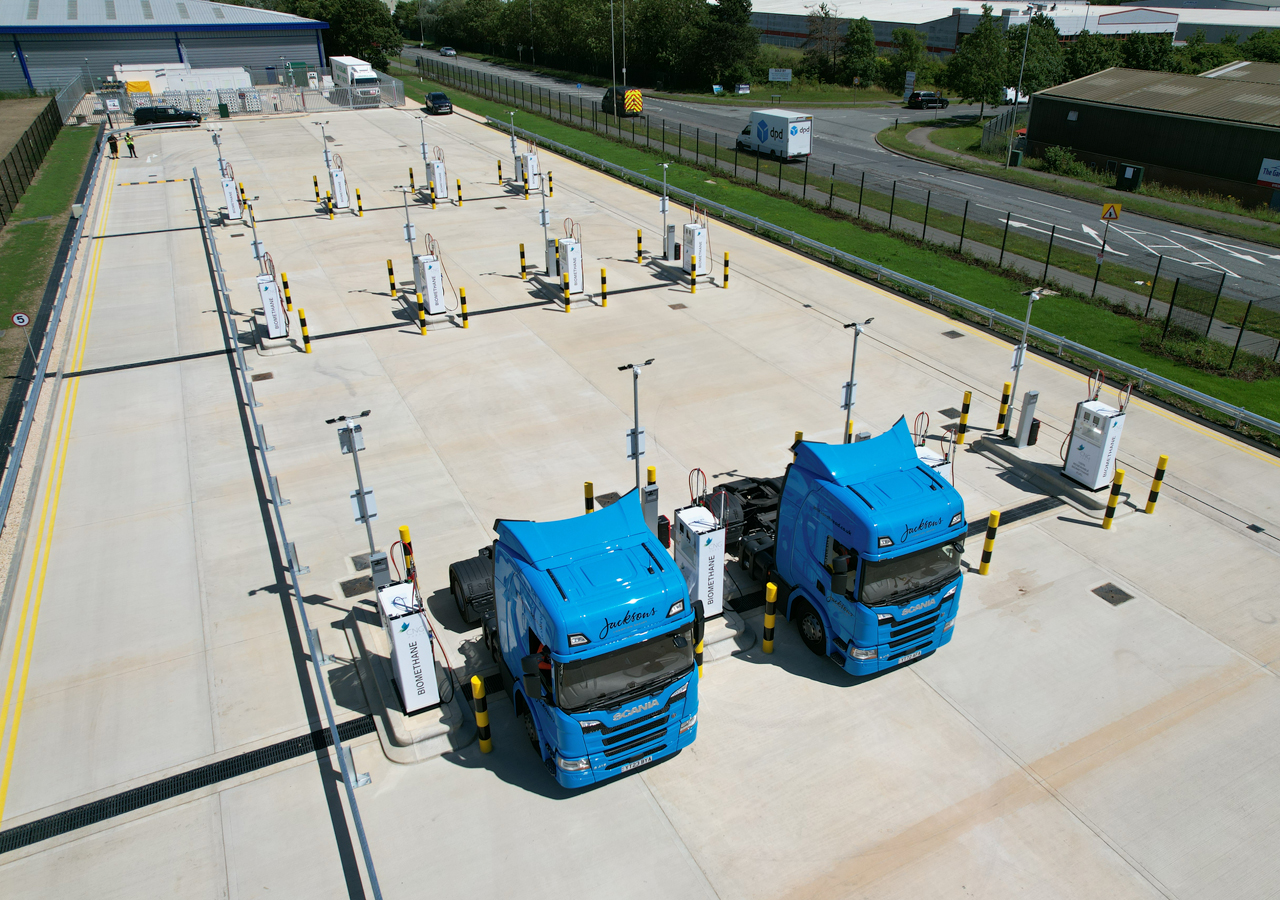
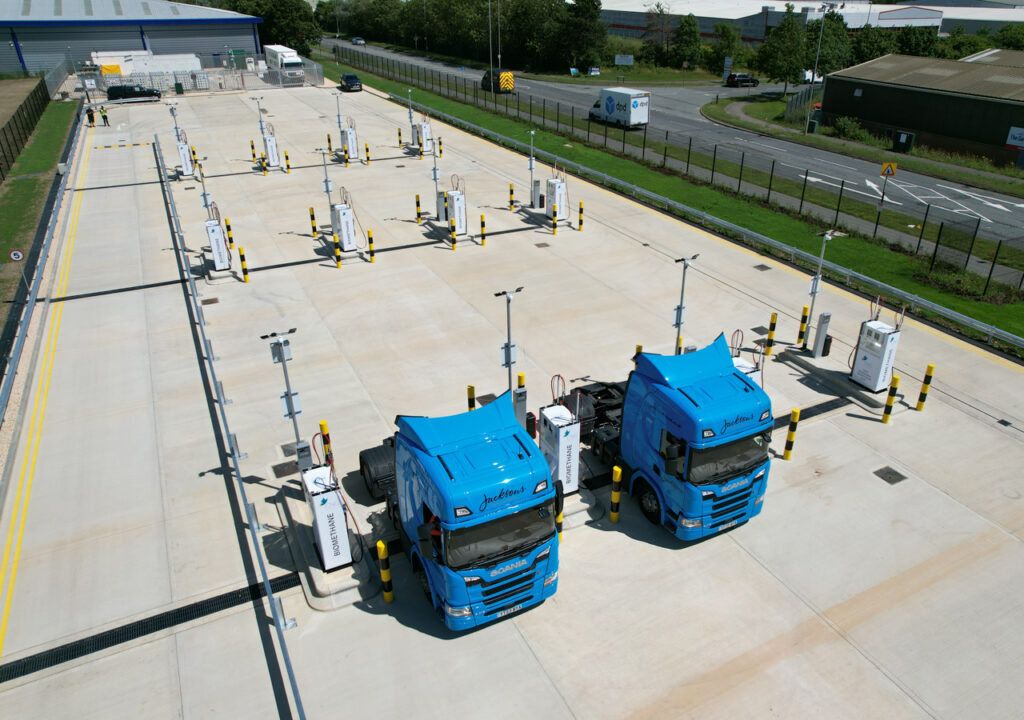
To help CNG Fuels continue its mission to help haulage operators become more sustainable, it set about constructing a new large-scale public access biomethane-CNG refuelling station. Based in Corby, on the corner of Steel Road and Phoenix Way, this site is the company’s 12th to go online.
OUR ROLE
We were appointed by CNG Fuels to help it realise its expansion plans with this new Corby refuelling station by providing civil engineering services to ensure the facility met the needs of both the client and the long flow of HGV vehicles that would be using it every day. We did this by ensuring compliance with local guidance and by following the principles of the CIRIA SuDS manual.
Challenges
The project faced several major challenges to ensure a safe, compliant, and sustainable solution was found for the filling station. As it would be used continuously by HGVs, the site would be subject to large loads requiring a design capable of supporting this.
However, it would also need to be sustainable and capable of handling heavy rainfall with an allowance for forecasted increases in extreme weather due to climate change. The drainage solution would need to prevent adverse effects on water quality and biodiversity, therefore would need to reduce runoff into the surrounding areas.
SUCCESSES
We developed a design that met these requirements and is capable of withstanding a 100-year return period of rainfall with a 30% additional allowance for climate change, ensuring all foreseeable storm flows are restricted to below pre-development QBAR. This was achieved using a geocellular storage tank and a full retention separator to treat runoff prior to entering the public sewer network.
The new filling station provides local businesses with the option to decarbonise their HGV fleets, whilst also serving passing fleets, adding another station to an area with a high concentration of commercial vehicles.
As a result, not only does this project help to support the decarbonisation of Britain’s haulage industry, it is delivering direct benefits to the local biodiversity and supporting the local economy.